Gen Z prefers stocks rather than houses to build wealth
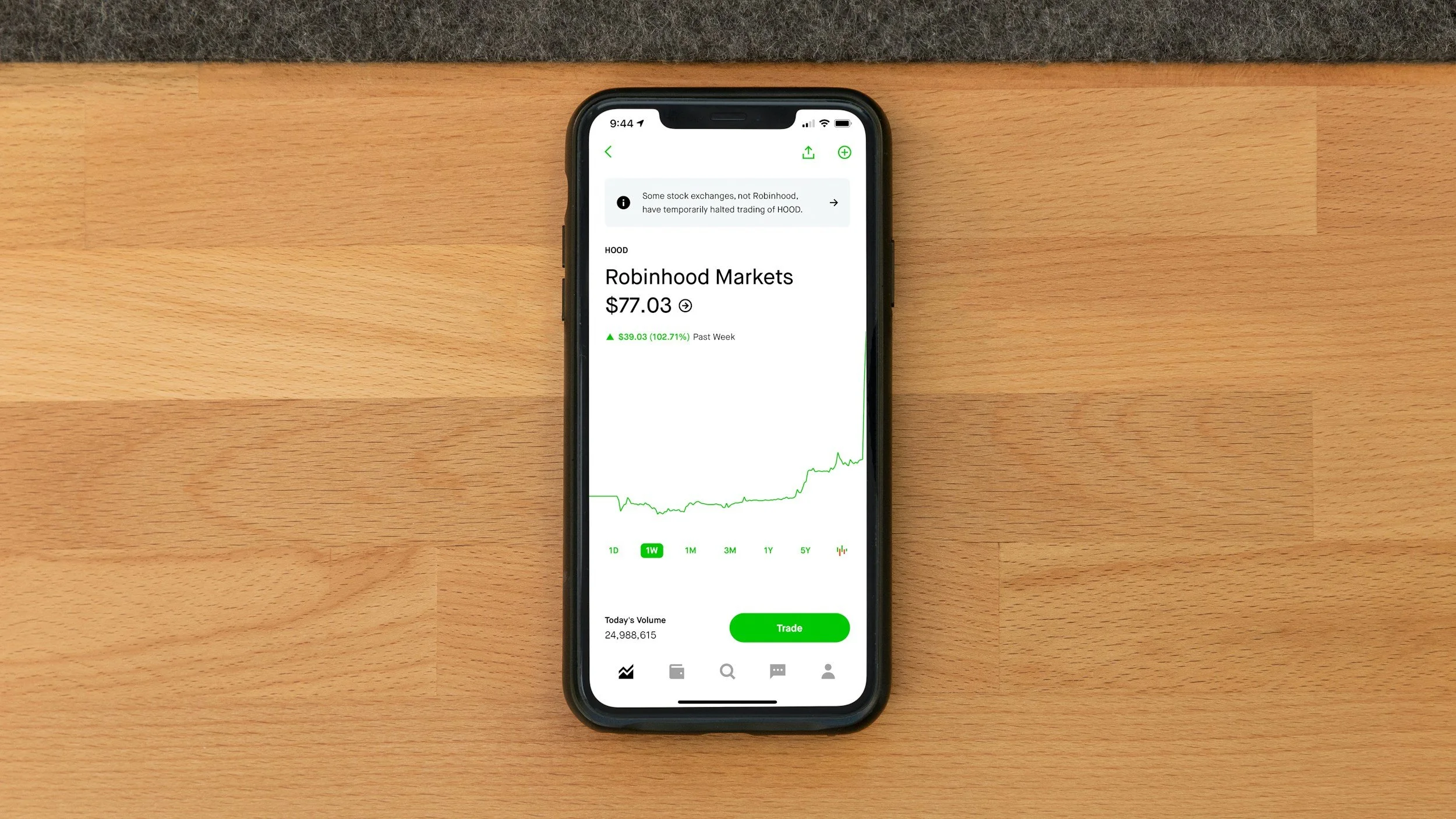
Priced out of the housing markets, younger generations must look further afield to save for retirement. While the barriers to entry in the housing market keep rising, access to financial markets has gotten cheaper.
This is a vastly different attitude and behavior from previous generations. It has been a tradition here in America that the way to build wealth and enjoy it was to buy a home.
As a result, homeownership is today the most valuable asset for the average American and accounts for nearly half of their accumulated wealth. In just about any study today, rising home equity accounts for the lion’s share of net worth.
Unfortunately, as I wrote in my last column, most Gen Zers cannot even afford the down payment on a home or the monthly payments. However, while many have found that they cannot afford a down payment on a house, they can open an account at Robinhood for next to nothing.
Participating in the financial markets has never been easier. No credit checks, brokers, paperwork, or down payments, just pick up your phone and place a trade. Encouraging this trend, Gen Z has much broader access to a long list of retirement plans thanks to employers and the government. The truth is, when I was that age, there were no government-sponsored retirement plans.
Most credit the arrival of the Covid pandemic for launching Gen Z’s love affair with the markets. Trapped at home with a large government paycheck in hand, the meme-stock mania enticed many to take a chance. As the stock prices of companies like GameStop and AMC soared higher daily, social media exploded with stories about finance and investing. Crypto soon joined the party, and it was off to the races as a generation of young Americans hit the buy button.
Of course, over time, the meme craze petered out, but by then Gen Zers realized there is no mystery in the financial markets. Thanks to an ever-increasing knowledge base fueled by an expanding stream of finance, how-to, and new, easier investment products, Gen Z has matured over the past five years.
As more youngsters joined the workforce, they showed little hesitation in opening IRAs, 401 (K)s, or equivalent tax-deferred accounts at their companies. Today, automatic enrollment is even available, as I discussed in a recent column. And investing early is increasingly important to this generation.
One of these new innovations is a personal finance app called Acorns. It is an app that lets you invest your spare change and other funds in diversified portfolios of EFs. According to a report by Acorns, published by the New York Times, 72% of Zers aged 18 to 35 believe they’ll need to rely entirely on themselves for retirement. More than half of the same group believe Social Security may be gone by the time they are eligible to collect.
Trading by retail investors has grown exponentially over the last 15 years and, on any given day, accounts for more than 25% of trading volume. If you count trading in zero date options (ODTE), they represent more than 60% of all S&P 500 index options volume. Roughly one-third of 25-year-olds have investment accounts. That is six times the number ten years ago.
I am sure this all sounds like an advertisement for more participation by young readers, but there is a large caveat and warning. Home prices have historically remained strong, though they have declined during periods such as the Financial Crisis of 2008-2009. In most periods, housing and the stock market tend to move together. Have a low level of correlation. It is the turtle, while the stock market represents the hare, and therein lies the problem.
Stocks, on the other hand, can be volatile. Since COVID, this new generation has bought every dip and been rewarded mightily for doing so. At some point, that won’t work, if history is any guide. Depending on how deep and long a correction might take, the risk is that Gen Zers panic and sell at the bottom, as so many investors did during the Financial Crisis. That could not only devastate their hard-earned retirement savings but also rock their belief in the market as a vehicle for retirement savings.
Bill Schmick is a founding partner of Onota Partners, Inc., in the Berkshires. Bill’s forecasts and opinions are purely his own and do not necessarily represent the views of Onota Partners, Inc. (OPI). None of his commentary is or should be considered investment advice. Direct your inquiries to Bill at 1-413-347-2401, email him at billiams1948@gmail.com, or visit his website at www.schmicksretiredinvestor.com. Investments in securities are not insured, protected or guaranteed and may result in loss of income and/or principal.